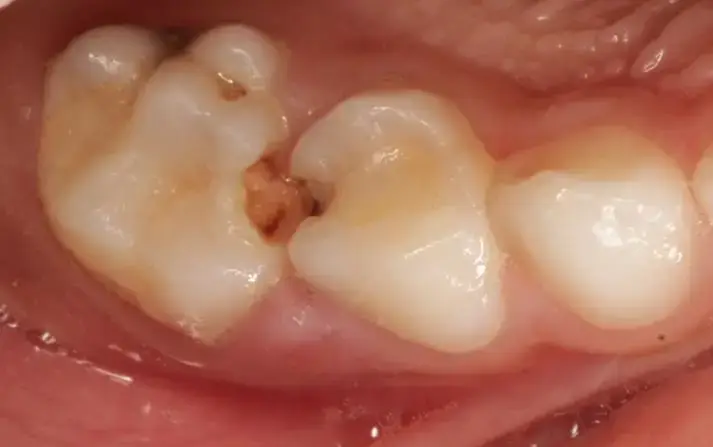
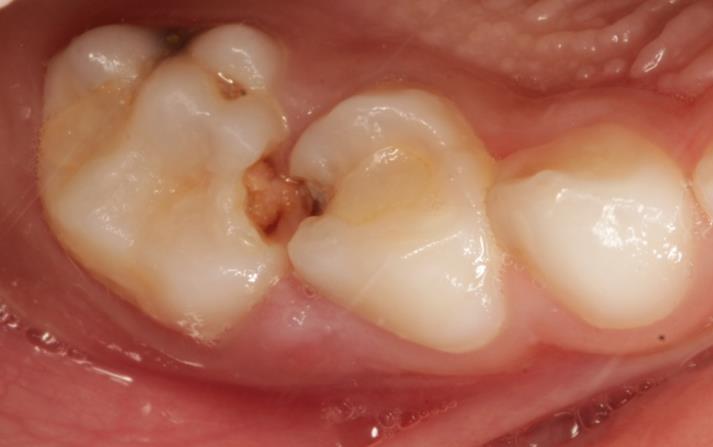
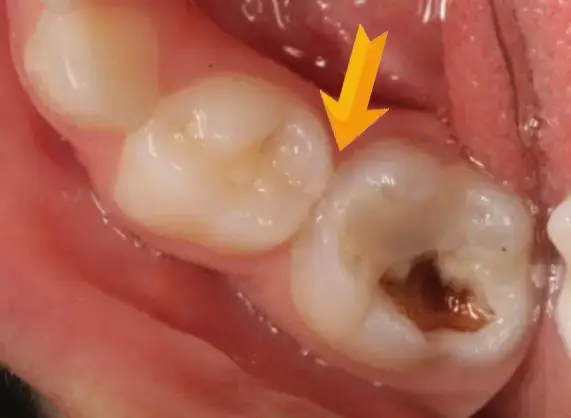
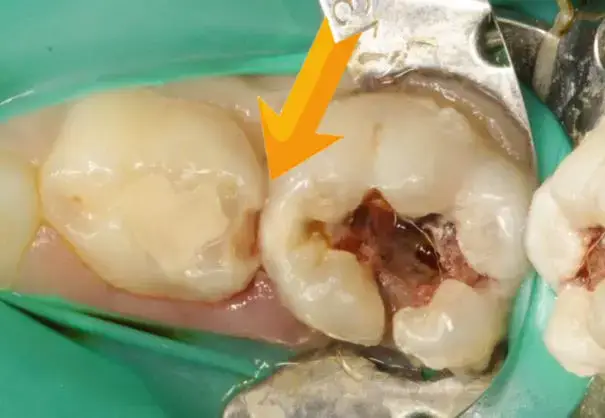
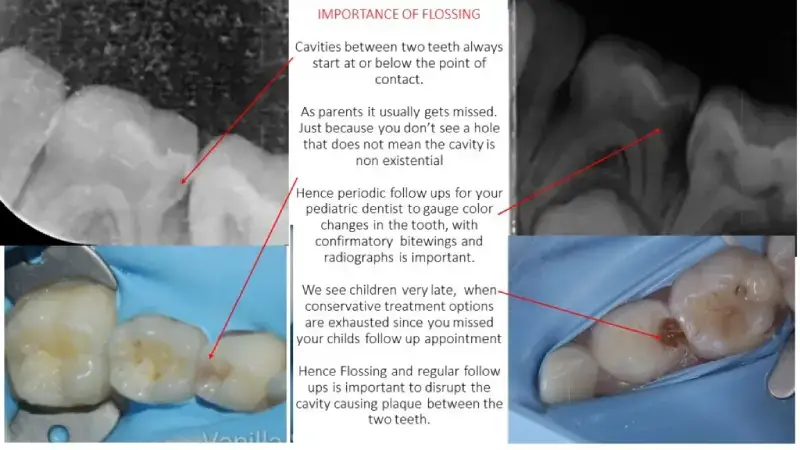
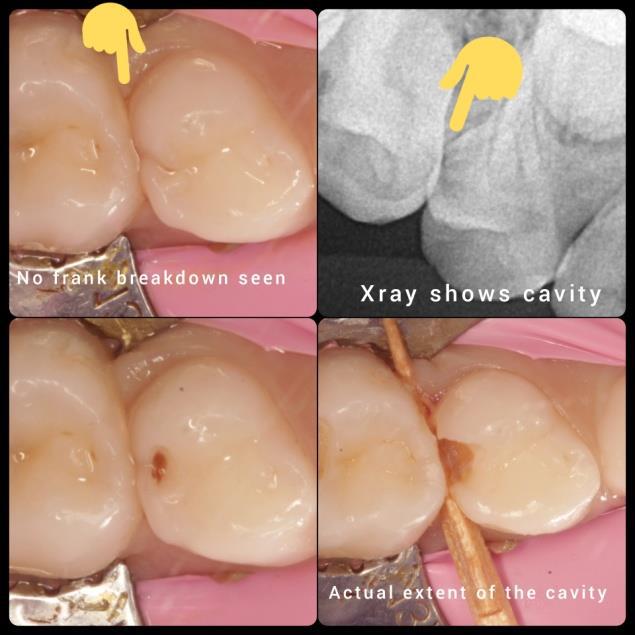
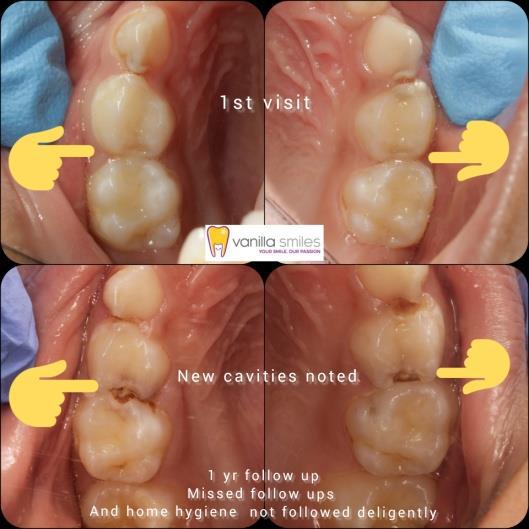
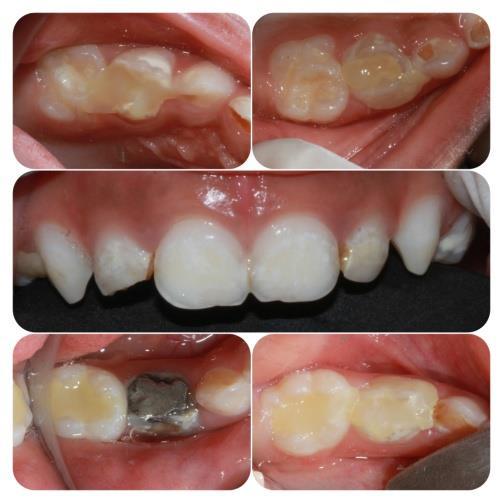
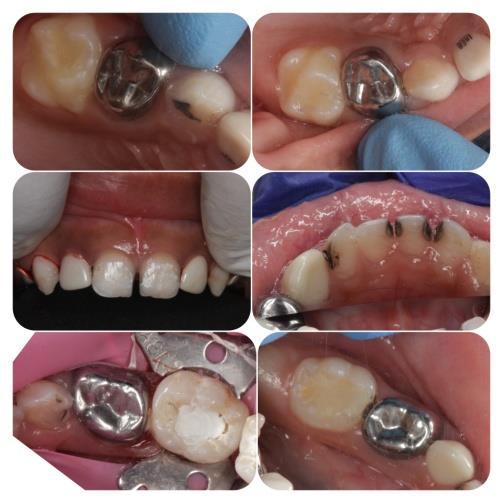
CLASS II carious lesions (cavities between 2 teeth) occur on proximal surfaces of your child’s back teeth. They may occur in combination with occlusal caries (class I) (caries on top portion of tooth) or they may occur alone. Mostly these cavities are not visible to human eye. They need to be detected by your child’s dentist near you whose eyes are trained into identifying them early and confirmed radiographically.
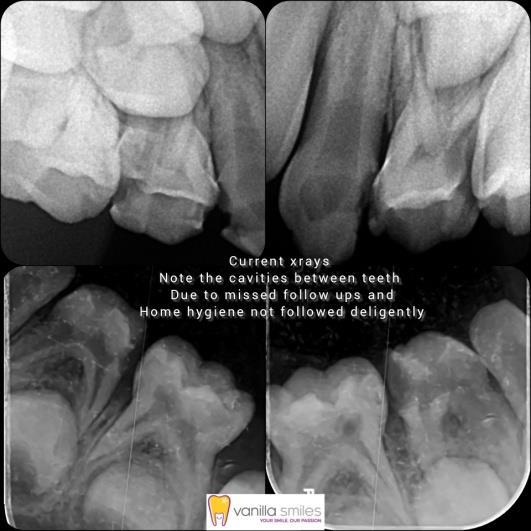
If You Can See In The Above Pictures You Canot Make Out The Decay In Between Two Teeth…. But Check Out The Xrays For The Same Below:
Could You Make Out From The Arrows That Sometimes We Dont Even Come To Know That There Can Be Decay In Between Two Teeth Inspite Of Not Seen Or Visible To The Naked Eye.
Bacteria, acid foods and saliva mix to form plaque. This sticky substance sticks and coats the teeth. This forms a biofilm which is a group of bacteria harbouring on the tooth surface. Without proper brushing and flossing, acids in plaque dissolve the tooth enamel creating cavities or holes. Untreated such cavities can lead to further increase of the cavity dept and further lead to toothaches, infectionand can also lead to tooth extraction.
Dear parents here we would stress the importance of flossing. Your brush will only disrupt the top surfaces but only the floss helps in protecting the surfaces between 2 teeth.
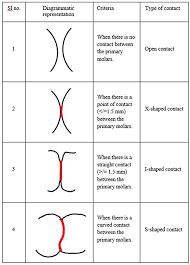
Tooth decay can happen at any age, although cavities are more common in children. They may not brush properly and consume more sugary foods and drinks. The prevalence of class II caries is mostly seen in a closed dentition(teeth with tight contacts) rather than a one with open dentition (generalized spacing )
A class II cavitated tooth when in contact with the adjacent tooth can cause erosion of the healthy adjacent tooth enamel too.and this can lead to interproximal caries. i.e : caries involving two teeth interproximally. So … what started as a cavity in one tooth geopardizes the integrity of the other tooth as Well.
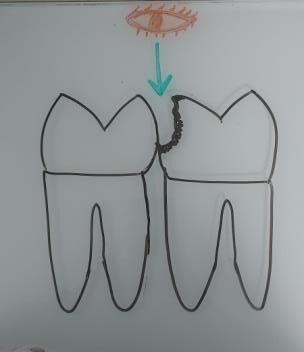
A Frank Cavity Is Visible In To Eyesight
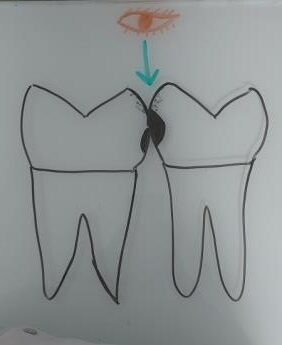
But Sometimes The Decay Is Present Between But Not Visible To Naked Eye
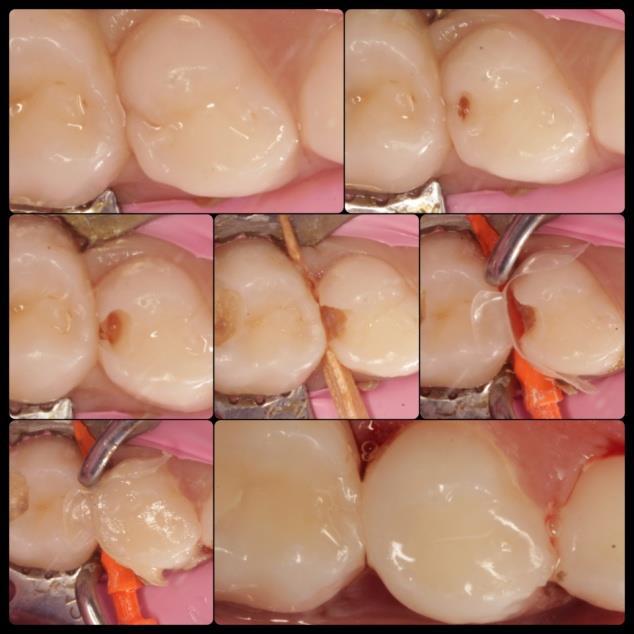
Restoring A Class II Cavity
A restoration should always rest on a healthy tooth structure. In case of children , class II cavities done on a healthy structure can also fail causing secondary caries and might get dislodged too. Factors contributing can be eating habits, improper home hygiene protocall, no flossing, missed dental check ups or may be unsupportive surrounding tooth structure. Etc.
In such cases the cavity can progress below the restoration (secondary caries) and damage the tooth more. Cavity in the centre of the tooth is protected by sound walls and a strong base adding years and life to the restoration. Hence , here a crown comes into picture….
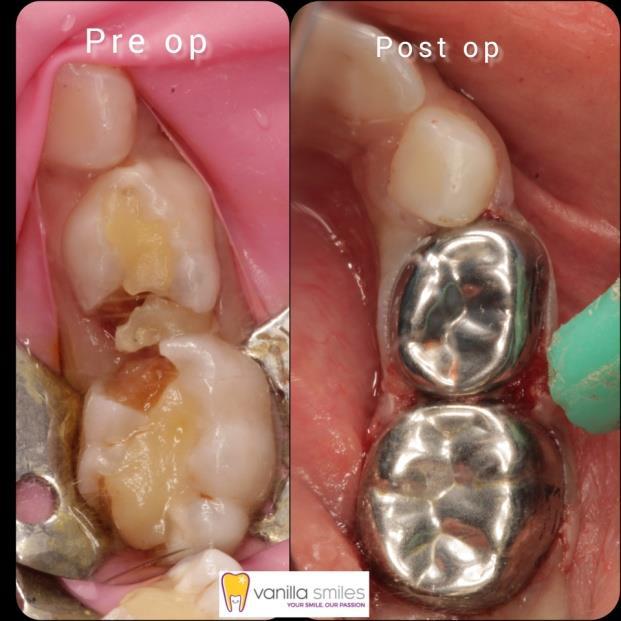
Why A Crown Is Necessary After Class II Restoration?
A pediatric crown encases the remaining tooth, providing protection and preventing for the further damage. Hence , if the decay has affected a significant portion of the tooth or more than one surface of the tooth, your dentist will recommend a restoration but along with a crown. It will help the restoration from getting dislodged , occurance of secondary caries and any further damage on other surfaces of the tooth.
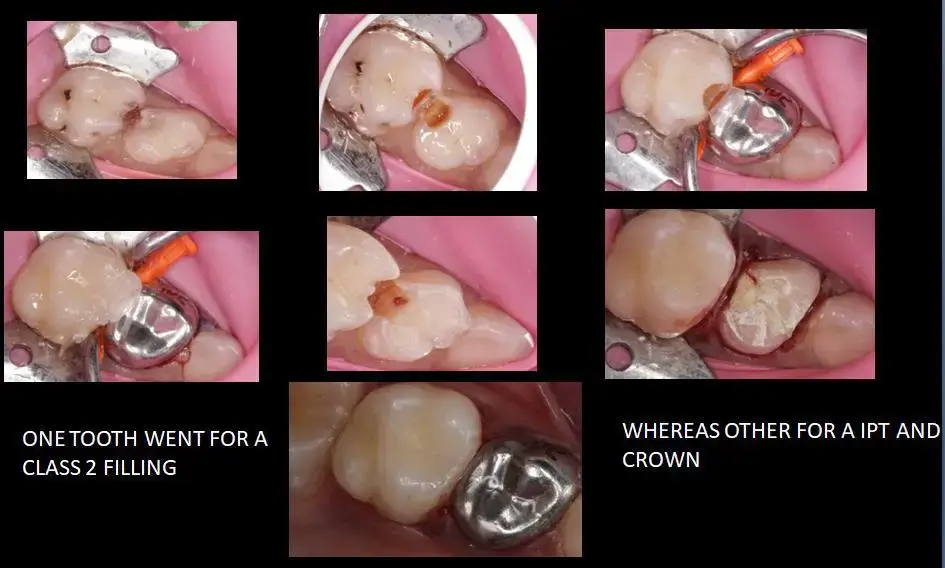
Consultation Dialogue: The tooth that needed just a filling and crown 3 months ago… now needs a rct and then a crown.. choose definitive for your child and don’t compromise the health of the tooth.
CONCLUSION :
A class II cavity should be assessed as early as possible. Visit a dentist for the same regularly. Cavity in between 2 teeth cab be restored but should also be covered with a crown considering further consequences. If not so you lead your child into a viscious cycleof re restorations or even painful episodes as the cavity may progress beneath the restoration and lead to infection and swelling. Early assessment and management involves the use of superfloss along with parental involvement and meticulous follow ups.
RESTORATIONS WE DO AT VANILLA SMILES INVOLVES :
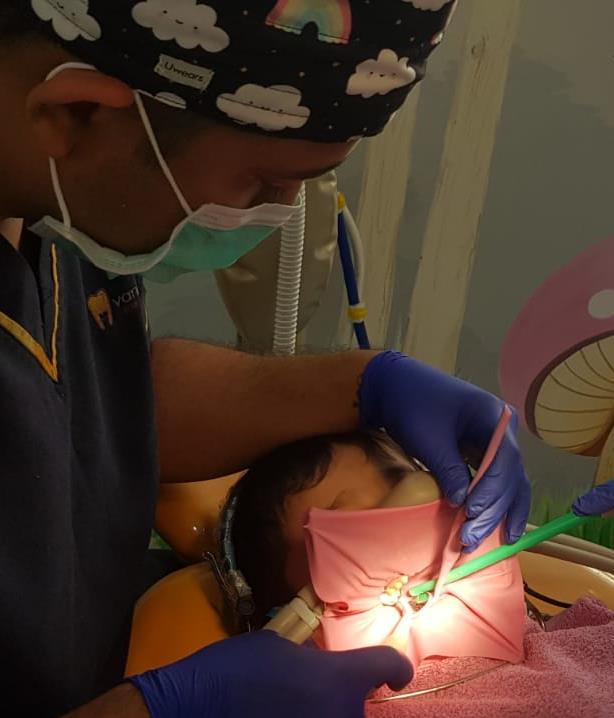
Absolute isolation:
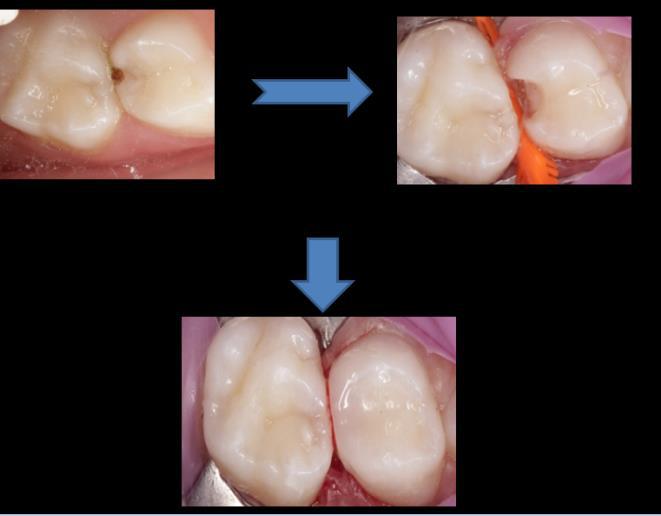
Our restorations don’t stick to adjacent teeth .
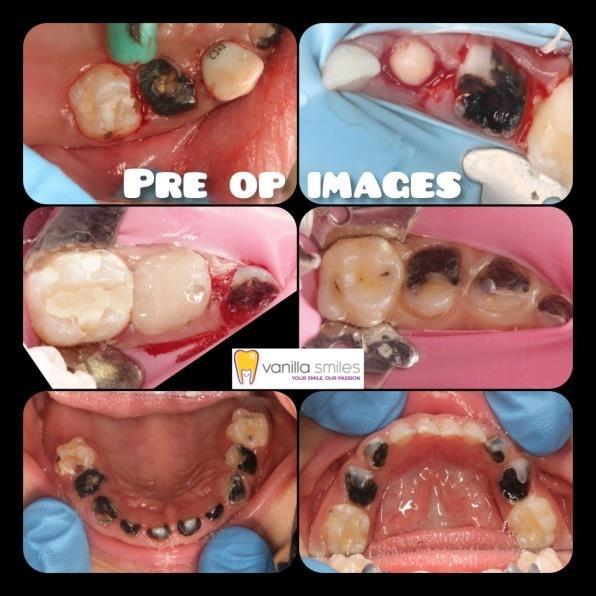
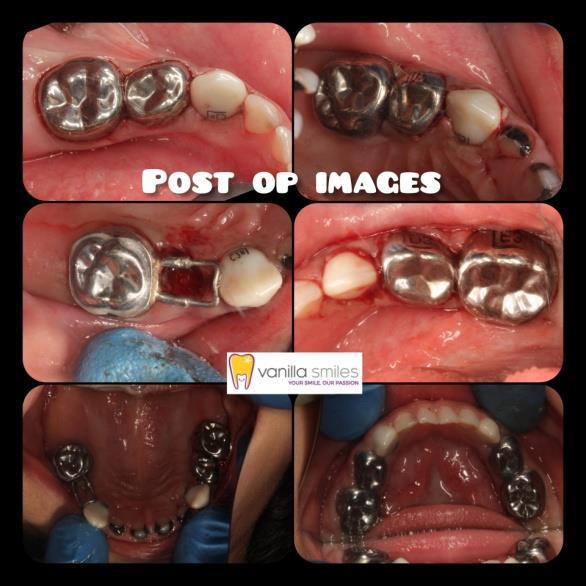
A CROWN IS IMPORTANT TO AVOID THE VISCIOUS CYCLES OF REPITETIVE RESTORATIONS….. HAVE A LOOK!!!!
Either you pay once with us or fall prey to the viscous cycle of repetitive failed filings and eventually pay more for the same tooth.
Efforts we take for restoration :
If you’re searching for a “dentist near me” to address Class 2 caries, Vanilla Smiles Dental Clinic in Shivaji Nagar, Pune, offers expert restoration treatments. Dr. Abhishek Soni, a skilled pediatric dentist, specializes in restoring cavities and ensuring optimal dental health for all ages. The clinic uses advanced techniques to treat Class 2 caries with precision and care. Trust Vanilla Smiles Dental Clinic for effective and comfortable solutions to your dental concerns.
Frequently Asked Questions (FAQs)
1. What are Class II caries? Class II caries are cavities that form between two back teeth on their proximal surfaces. They often cannot be seen with the naked eye and require dental X-rays for accurate diagnosis.
2. Why can’t Class II cavities be seen easily? These cavities develop in the tight contact area between two teeth. Since the space is hidden, they are usually not visible unless decay becomes extensive. X-rays help detect them early.
3. What causes Class II caries in children? Class II caries are caused by plaque accumulation, poor brushing, lack of flossing, frequent sugary snacks, tight contacts between teeth, and improper cleaning of the sides of teeth.
4. How does flossing help prevent Class II cavities? A toothbrush cleans only the top and outer surfaces of teeth. Floss removes plaque and food stuck between two teeth—exactly where Class II cavities form—making it essential for prevention.
5. Who is more likely to get Class II caries? Children are more prone because they tend to snack more, brush less effectively, and may have tight contacts between teeth. Kids with poor oral hygiene or sugary diets are at higher risk.
6. Can an untreated Class II cavity spread to nearby teeth? Yes. A cavity on one tooth can erode the enamel of the adjacent tooth, creating interproximal decay on both teeth if not addressed early.
7. How are Class II cavities restored? To restore Class II caries, the dentist removes decay, creates proper shape, restores the tooth with composite material, and ensures the filling is well-sealed and not sticking to the next tooth.
8. Why might a Class II restoration fail in children? Failures can occur due to poor home hygiene, sugary diet, lack of flossing, missed dental visits, weak surrounding tooth structure, or if the restoration was placed on compromised tooth walls.
9. Why is a crown sometimes recommended after a Class II filling? If a large portion of the tooth is damaged or multiple surfaces are affected, a crown protects the remaining tooth, prevents further decay, and avoids the cycle of repeated fillings.
10. When should parents get a Class II cavity checked? Parents should seek evaluation as soon as they suspect cavities, or during routine dental checkups every 6 months. Early detection prevents pain, infection, and the need for more complex treatments like root canals.
Address: Soni Capital, 2nd Floor, Near Shreyas Hotel, 1237, Apte Road, Shivaji Nagar, Pune, Maharashtra 411004 India
Meet Our Pediatric Dentist
Dr. Abhishek Soni- BDS, MDS – Pediatric & Preventive Dentist
At Vanilla Smiles Dental Clinic in Pune, Dr. Abhishek Soni stands out as the leading pediatric and preventive dentist in the area, committed to providing top-notch care to your little ones.
With an impressive background in dentistry, Dr. Abhishek Soni, BDS, MDS, brings a wealth of knowledge and experience to his practice. He specializes in child dentistry, making him the go-to expert for parents seeking the best pediatric dentist in Pune. His dedication to the field is evident through his extensive list of services aimed at addressing the unique dental needs of children.