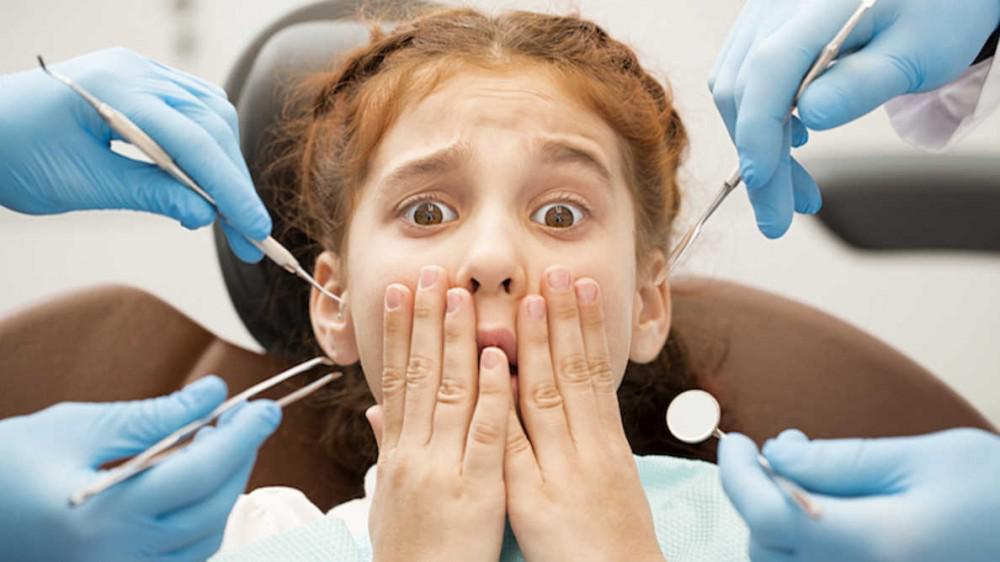

Fear of the dentist has been ranked fourth among common fears.
Dental fear in children has an overwhelming effect on their conduct which includes them to a have preconceived notion that the dental treatment will be of a painful nature.
Dental fear hampers their ability to cope with clinical setting of a dental clinic, which in turn leads to failure to seek timely dental treatment, and eventual deterioration of oral health.
Such is the psychological impact of negative dental experience, that its remnants are seen as after effects in adult life.
Dental fear has been also reported as one of the most important reasons for avoidance and negligence of regular dental care. Neglect of dental care may lead to dental decay and pain that usually results in a visit to the dentist which in turn increases the patient’s original dental fear and thereby completing a vicious cycle.
Here a pre cooperative child 3.3 yr old, presented with a past dental experience by physically restraining the child. Treatment was done against her wishes that lead to development of dental fear.
Apparently the entire experience lead to
- Avoiding further dental treatment by parents, since the experience stings both the parent and the child.
- Preventive treatments follow-ups go a miss, and some teeth that could have been saved by non-invasive treatment eventually flare-up to severe pain and eventual loss or the dreadful root canal treatment for your child.
- The squirming child whos at the apex of the pediatric triangle not only affects the parents, but also affects the efficiency of the pediatric dentist and delivering quality dental care, that should ideally do its work until your childs milk tooth exfoliates. Last but not the least, the same kids, parents share their experiences with peers, which starts instilling fear and anxiety even in those that are yet to establish contact with pediatric dental offices.
- Dental treatment is not expensive but Dental Neglect is. Let not fear be the reason for this neglect.
Why Do Children Catch Cavities ?….Read More….
So, is there a way to avoid this?
Well there surely is,
Pediatric dental moderate sedation is one of the answers to provide quality dental care as well instill a positive dental attitude.
See it, Believe it!
Frequently Asked Questions (FAQs)
1. Why do children develop dental fear or anxiety?
Children often fear the dentist due to past traumatic experiences, unfamiliar sounds, separation anxiety, or hearing negative stories. A painful or forceful dental visit can create long-lasting fear that affects future dental behavior.
2. How does dental fear impact my child’s oral health?
Dental fear leads to treatment delays, skipped appointments, and missed preventive care. This usually results in worsening dental problems, such as cavities, infections, pain, and eventually more invasive treatments like root canals or extractions.
3. Can a negative dental experience affect a child later in life?
Yes. Research shows that early traumatic dental experiences can influence dental behavior even in adulthood, making individuals avoid treatment and neglect oral health.
4. What are signs that my child is anxious about visiting the dentist?
Common signs include crying, clinging to parents, refusing to open the mouth, physical restlessness, tantrums, or expressing fear days before the appointment.
5. How does Vanilla Smiles manage fear in pre-cooperative or anxious children?
The clinic uses gentle communication, a supportive environment, NOIS Laughing Gas, behavior guidance techniques, and moderate sedation when needed to help children feel safe and relaxed.
6. What is NOIS Laughing Gas and how does it help anxious children?
NOIS Laughing Gas (Nitrous Oxide) is a safe, mild sedative that reduces anxiety, helps children cooperate, and creates a calm, pleasant dental experience without putting them to sleep.
7. When is pediatric dental sedation recommended?
Sedation is helpful when a child is extremely anxious, has had traumatic dental experiences, requires multiple procedures, or is unable to sit still due to age or temperament.
8. Is sedation safe for young children?
Yes, when administered by trained pediatric dental professionals. Sedation is carefully monitored, dosage is individualized, and safety guidelines are strictly followed to ensure a smooth and positive treatment experience.
9. How can parents help reduce their child’s fear of the dentist?
Parents can use positive language, avoid sharing their own dental fears, read child-friendly dental storybooks, maintain routine dental visits early in life, and trust pediatric dentists to guide the child gently.
10. Can dental fear be completely prevented?
While every child is different, early dental visits, positive experiences, preventive care, and compassionate management greatly reduce the risk of dental fear. Establishing a “dental home” early helps children feel safe and confident.
For more information kindly visit our website: https://www.vanillasmiles.dental/
Find clinic here: Get direction
Call Now: +919860633281
Address: Soni Capital, 2nd Floor, Near Shreyas Hotel, 1237, Apte Road, Shivaji Nagar, Pune, Maharashtra 411004 India