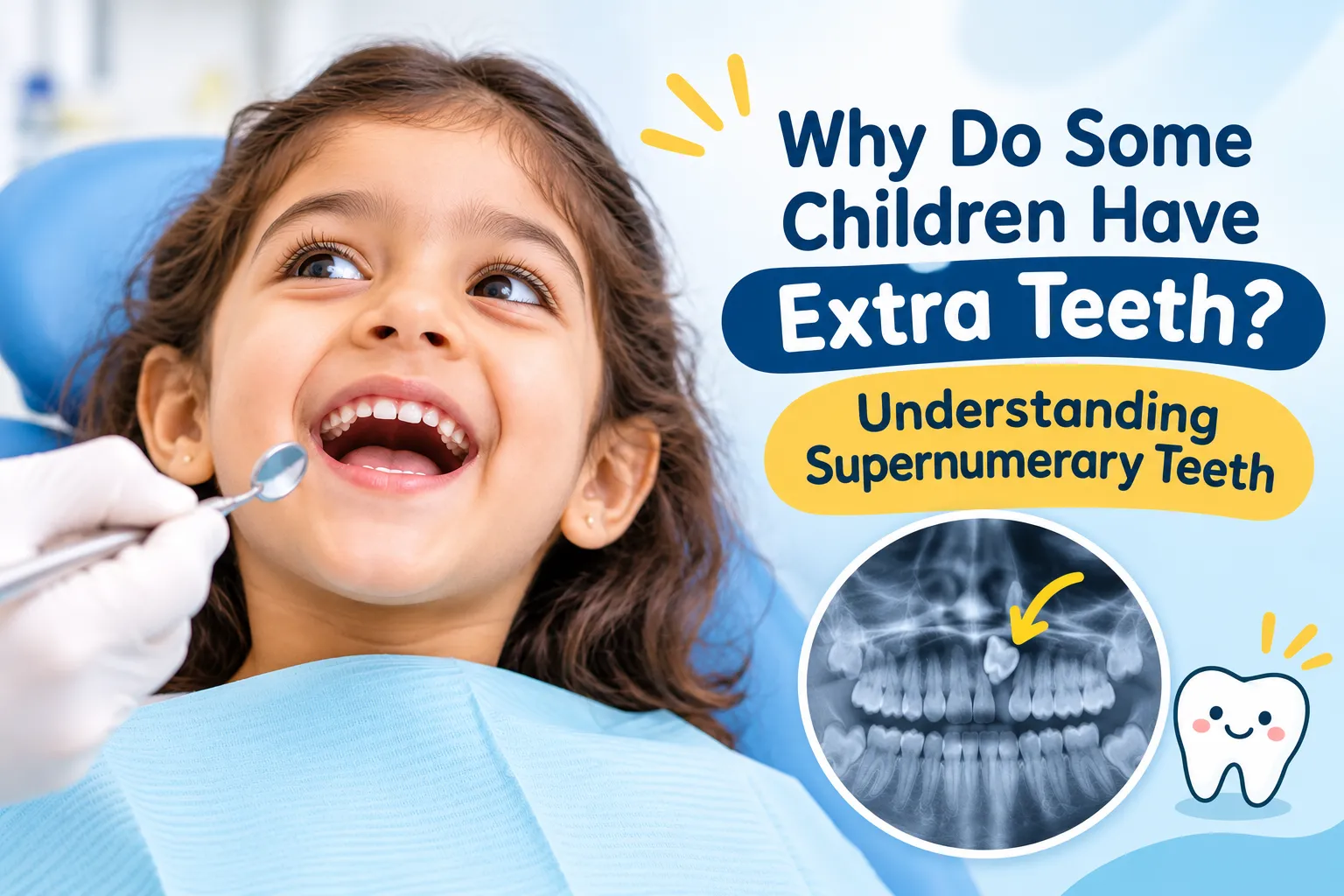

Most children develop 20 primary (baby) teeth, followed by 32 permanent teeth as they grow. However, some children develop additional teeth beyond the normal number. This condition is known as supernumerary teeth or hyperdontia.
Extra teeth may appear behind the upper front teeth, between existing teeth, or in other areas of the mouth. Sometimes they are clearly visible, while others remain hidden inside the jawbone. Although this condition may not cause immediate discomfort, it can affect the eruption and alignment of permanent teeth.
Understanding the causes, symptoms, and treatment options can help parents seek timely advice from a qualified pediatric dentist in Pune.
What Are Supernumerary Teeth in Children?
Supernumerary teeth are additional teeth that develop beyond the normal number of baby or permanent teeth. They can occur in both primary and permanent dentitions, although they are more commonly found in permanent teeth.
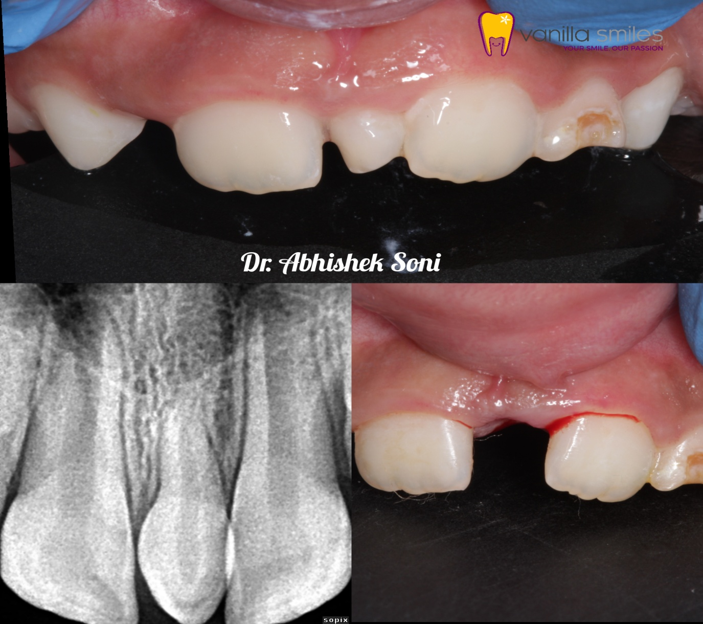
One of the most common types is called a mesiodens, which develops between the two upper front teeth. It may remain hidden behind the regular teeth and sometimes interfere with their normal eruption.
Why Do Some Children Develop Extra Teeth?
The exact cause of supernumerary teeth is not completely understood. However, researchers have identified several possible contributing factors.
1. Genetic Factors
Some children may have a family history of extra teeth. Genetic influences can play a role in abnormal tooth development, although not every child with supernumerary teeth has an affected family member.
2. Excessive Activity of the Dental Lamina
The dental lamina is a tissue involved in the formation of teeth. One widely accepted explanation suggests that increased activity in this tissue may lead to the development of additional tooth structures.
3. Developmental Factors
Changes during the early stages of tooth development may sometimes result in additional tooth formation. These developmental variations can affect the number, shape, and position of teeth.
4. Certain Genetic Conditions
Multiple supernumerary teeth can sometimes be associated with conditions such as cleidocranial dysplasia and Gardner syndrome. However, most children with a single extra tooth do not necessarily have an underlying syndrome.
What Are the Different Types of Extra Teeth?
Supernumerary teeth are classified according to their shape and location.
- Mesiodens: An extra tooth located between the two upper front teeth.
- Paramolar: An additional tooth developing beside the molars.
- Distomolar: An extra molar located behind the last regular molar.
- Supplemental Teeth: Extra teeth that resemble normal teeth in shape and size.
- Conical Teeth: Small, cone-shaped additional teeth.
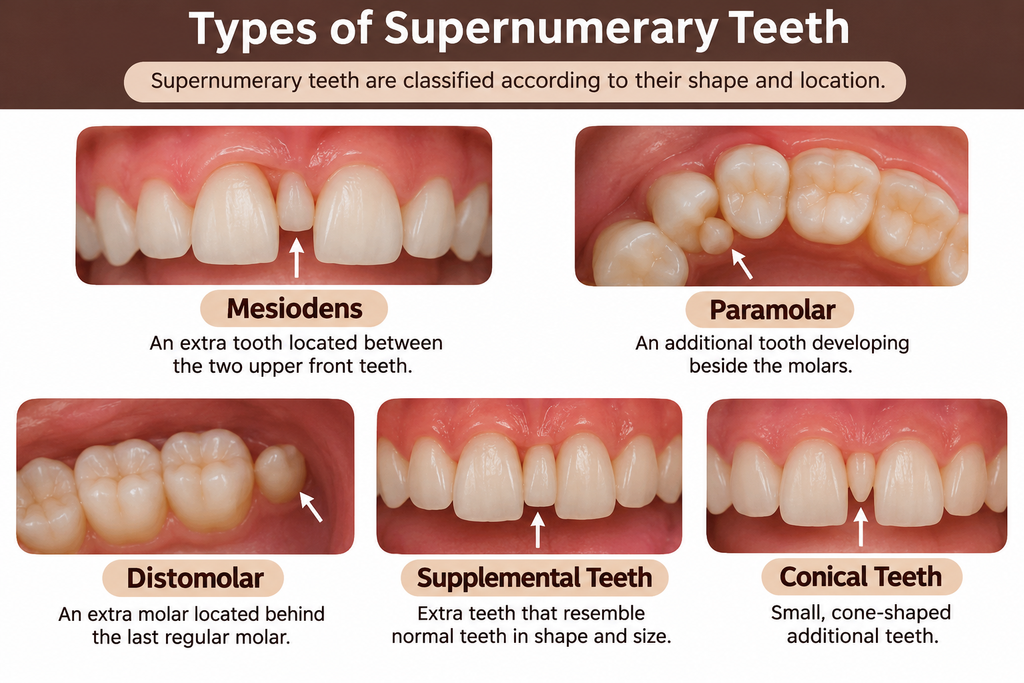
Identifying the type and position helps the dentist determine whether treatment is necessary.
What Problems Can Extra Teeth Cause?
Not every extra tooth requires immediate removal. However, certain supernumerary teeth can interfere with normal dental development.
Common complications include:
- Delayed Tooth Eruption: Permanent front teeth may take longer to emerge.
- Crowded Teeth: Extra teeth can reduce available space in the dental arch.
- Misaligned Teeth: Nearby teeth may shift, rotate, or develop in an unusual position.
- Spacing Problems: Additional teeth may create irregular gaps between front teeth.
- Impacted Teeth: A permanent tooth may remain trapped inside the jawbone.
- Damage to Nearby Teeth: In certain cases, an extra tooth can affect the roots of neighbouring teeth.
Parents should pay particular attention if one upper front permanent tooth appears much later than the other.
How Are Supernumerary Teeth Diagnosed?
A pediatric dentist begins with a clinical examination to check the number, position, and eruption pattern of the child’s teeth.
If an extra tooth is suspected, dental X-rays may be recommended to identify hidden teeth and understand their position in relation to neighbouring roots.
Depending on the case, the dentist may suggest:
- Intraoral dental X-rays.
- Panoramic radiographs.
- Additional imaging when detailed positioning is required.
Early diagnosis helps determine the appropriate treatment timing and reduces the possibility of complications.
What Is the Treatment for Extra Teeth in Children?
Treatment depends on the child’s age, dental development, tooth position, and whether the extra tooth is affecting normal eruption.
Possible treatment approaches include:
- Regular Monitoring: If the extra tooth is not causing problems, periodic clinical and radiographic monitoring may be sufficient.
- Extraction: Removal may be recommended if the extra tooth blocks permanent tooth eruption or causes crowding.
- Orthodontic Treatment: Braces or other orthodontic procedures may be considered if neighbouring teeth require alignment.
- Follow-Up Evaluation: After removal, the dentist monitors the eruption of the permanent teeth and determines whether further treatment is required.
Not every extra tooth needs extraction. Removing it too early may sometimes risk damaging developing permanent teeth, so individual treatment planning is essential.
Expert Pediatric Dental Care at Vanilla Smiles Dental Clinic, Pune
Identifying dental development problems during childhood can help prevent more complicated issues later. Regular dental checkups allow parents to understand their child’s tooth eruption pattern and address concerns at the appropriate time.
At Vanilla Smiles Dental Clinic, Pune, Dr. Abhishek Soni (BDS, MDS, FIAPD), Pediatric and Preventive Dentistry Specialist, focuses on children’s oral health, preventive dental care, and developing dentition.
Parents concerned about extra teeth, delayed tooth eruption, crowded teeth, or unusual dental development can seek a professional pediatric dental evaluation.
Is your child developing an extra tooth or experiencing delayed eruption of permanent teeth? Visit Vanilla Smiles Dental Clinic in Pune for an assessment and appropriate treatment guidance.
Give your child’s growing smile the attention it deserves with timely pediatric dental care.
Vanilla Smiles Dental Clinic
Dr. Abhishek Soni
BDS, MDS, FIAPD – Pediatric & Preventive Dentist
Find clinic here: Get direction
Call Now: +917028029383 / +919860633281
Address: Soni Capital, 2nd Floor, Near Shreyas Hotel, 1237, Apte Road, Shivaji Nagar, Pune, Maharashtra 411004 India
Disclaimer: AI-generated content, reviewed and edited by a Dentist.